


Montana Meter Upgrade
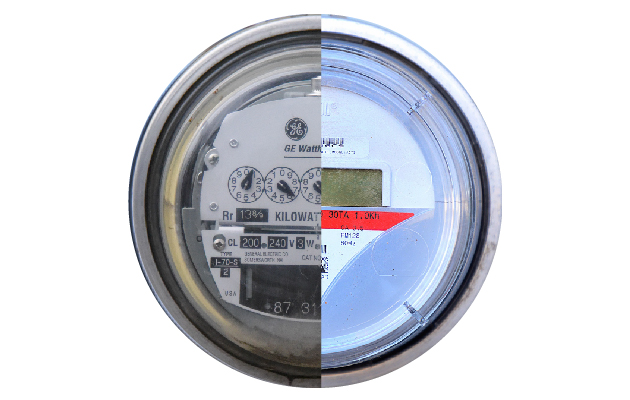
NorthWestern Energy is upgrading our electric meters and gas modules.
- This technology upgrade will allow two-way communication between NorthWestern Energy and its meters on customer homes and businesses.
- In most cases, the system will notify NorthWestern Energy of an outage.
- Crews can restore service faster.
- Current energy use information is available for customer questions about bills, energy use and opportunities for energy savings
- System voltage information identifies problems before those problems cause outages.
The energy landscape is changing — and so are our customers’ expectations. As we modernize the energy grid, including using two-way communicating meters, also known as smart meters, our customers will benefit.
Moving Toward a Sustainable Energy Future
Moving Toward a Sustainable Energy Future
The energy grid is evolving, driven by the need to support more renewable resources as we transition to an even cleaner energy future. Smart metering provides more data on grid operations, which will allow opportunities for new customer programs and technology that will help balance the energy grid with renewable resources.
Advanced Meter FAQs
What is the advanced meter project timeline in Montana?
NorthWestern Energy began installation in Montana in 2021. Here is a list of approximate dates for the Montana Meter Upgrade project by area:
- Missoula Division: completed August 2022
- Butte Division: completed June 2022
- Bozeman Division: completed May 2024
- Billings Division: completed October 2024
- Lewistown District: completed October 2024
- Havre District: completed November 2024
- Helena Division: June 2024 – May 2025
- Great Falls Division: August 2024 – 2028
Who will change my meter?
A NorthWestern Energy employee will install your new meter or module.
Will I have to pay for the meter?
No. The electric meters and gas modules are purchased and owned by NorthWestern Energy. They are part of our infrastructure, similar to our power poles and transformers.
When will the meters be installed and do I need to be home?
Most of the installations will occur during business hours, though there will be cases when evening or weekend installations may be necessary. Customers don't need to be home.
A door hanger will let residents know their upgrade was successful. If the technician cannot perform the upgrade, a door hanger will be left with instructions to call to make an appointment.
What happens to the meter on my home or business now?
NorthWestern Energy has a contract to recycle the electric meters and gas modules in use now when new meters and modules are installed.
Are radio frequency (RF) emissions coming from the meters and modules?
Yes. The Federal Communications Commission (FCC) regulates the safety limits for all RF emissions, and smart meter and module emissions make up a small portion of the limit. The RF emissions of old one-way communication meters and the new two-way communication meters are both approved by the FCC. Radio frequency emissions are also produced by common household devices such as microwaves, baby monitors and TVs.
Is customer information protected?
Yes. Customer privacy and security are NorthWestern Energy priorities. The company’s strict security standards have contributed to protecting the energy grid and customer privacy for years. The meters do not collect, store or transmit any personally identifiable information.
The meters measure total energy and cannot differentiate energy usage by appliance or anything else within a home or business. The transmitted energy use information is encrypted.What if I don’t want an upgraded meter?
Customers who want to keep their existing meters can call NorthWestern at 888-467-2669 or email NorthWesternEnergyMeters@northwestern.com to be added to the bypass list. Customers who previously requested an opt out do not need to contact NorthWestern again to be bypassed and keep their meters.
NorthWestern will be reaching out to customers who received an advanced meter despite their request to opt out. For those who still wish to opt-out, NorthWestern will ensure that the advanced meter is removed and replaced with a meter similar to the one that was there before. Customers will not be charged for this service.
Customers who have questions about the advanced meter opt-out program can contact NorthWestern at 888-467-2669
or the Montana Public Service Commission at 1-800-646-6150 or pschelp@mt.gov.
How do I read my meter?
If you have a non-communicating electric or gas meter, you can find information about how to read it and submit a self-read here.
Montana Customers Come First—Today and Tomorrow
Date: May 11, 2026
TYPE: News
NorthWestern Energy Vice President Operations Jason Merkel and NorthWestern Energy Vice President Planning, Development and Asset Management Bleau LaFave
Montanans depend on safe, reliable energy every day and meeting those needs — now and into the future — requires thoughtful planning and strong resources. As energy demand grows and infrastructure needs increase, NorthWestern Energy’s proposed merger with Black Hills Corp. is about being better prepared so we can meet future energy needs, maintain reliability and continue delivering the service customers count on.
Recent commentary has raised questions about the purpose of this merger, particularly related to data centers. It’s important to be clear: this merger is not about large new energy users. It is about strengthening the enterprise that supports our local energy company so it can better serve customers across Montana — today and in the decades ahead.
Separate from the merger is a different issue: how Montana should serve large new energy users. NorthWestern Energy submitted a proposed Large New Load Tariff Rule to the Montana Public Service Commission to consider how a solution that is right for this state should be put in place.
Montanans deserve clear, accurate information about these important but separate issues— not commentary that blurs the facts or exploits fears.
The proposed Large New Load Tariff Rule is designed to protect existing customers and support responsible economic growth.
First and foremost, it protects customers. The framework is built on a clear principle — new large-load customers must pay the cost of serving their energy needs. That includes the cost of generation, transmission, and local infrastructure required to serve them. It also includes minimum demand and energy requirements to ensure those investments are used, financial assurances to guarantee payment, and provisions that require large-load customers to cover costs if they reduce usage or leave early.
These safeguards are not incidental — they are the core of the proposal. They are designed specifically to prevent cost shifting, so that existing customers don’t subsidize new, energy-intensive users.
The proposed tariff rule also requires upfront studies and formal service agreements before any new large load is connected. This ensures infrastructure needs, system impacts and long-term costs are fully understood before commitments are made. It replaces uncertainty with a structured, transparent process and keeps energy service reliability for existing customers at the forefront.
At the same time, the proposed tariff rule supports economic growth in a way that aligns with Montana’s interests. Investments that new large customers can bring to Montana’s energy system should be a benefit to all customers.
That balance matters.
The Montana Public Service Commission will evaluate the tariff rule, consider stakeholder input and determine whether it meets the standards for fairness, reliability and customer protection.
The merger is a separate question.
The merger is about building a stronger company to serve Montana for the long term. Our energy system must perform through extreme weather, growing demand and evolving needs. Strengthening the organization helps ensure long-term investments can be made responsibly and efficiently — supporting reliability, helping keep energy affordable and ensuring homes stay warm and the lights stay on.
The Montana Public Service Commission will continue to oversee rates, reliability and customer protections in Montana. That does not change. Any future rate adjustments must go through the transparent, public Montana Public Service Commission review process.
Our more than 1,350 Montana employees live, work and raise their families in the communities we serve. They understand what reliable energy service means in everyday life, and that local commitment remains at the core of how we operate. They are and will remain the heart of NorthWestern Energy and the foundation of our ongoing commitment to Montana’s communities. We are proud to serve Montana and will continue to serve with the same dedication as part of the new company.
These are important discussions. They should be grounded in facts.
Our commitment is straightforward: protect customers, support responsible growth and ensure Montana’s energy system is ready for the future.