


Montana Meter Upgrade
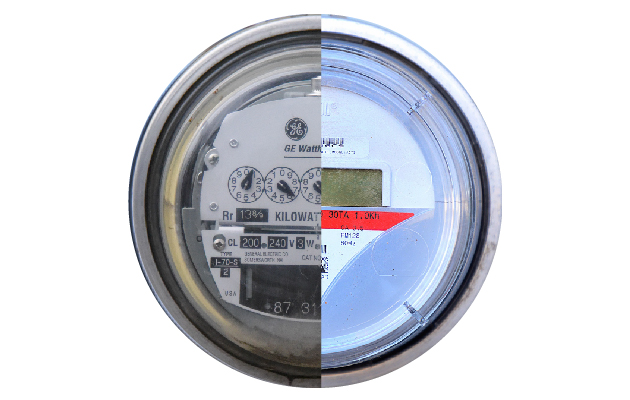
NorthWestern Energy is upgrading our electric meters and gas modules.
- This technology upgrade will allow two-way communication between NorthWestern Energy and its meters on customer homes and businesses.
- In most cases, the system will notify NorthWestern Energy of an outage.
- Crews can restore service faster.
- Current energy use information is available for customer questions about bills, energy use and opportunities for energy savings
- System voltage information identifies problems before those problems cause outages.
The energy landscape is changing — and so are our customers’ expectations. As we modernize the energy grid, including using two-way communicating meters, also known as smart meters, our customers will benefit.
Moving Toward a Sustainable Energy Future
Moving Toward a Sustainable Energy Future
The energy grid is evolving, driven by the need to support more renewable resources as we transition to an even cleaner energy future. Smart metering provides more data on grid operations, which will allow opportunities for new customer programs and technology that will help balance the energy grid with renewable resources.
Advanced Meter FAQs
What is the advanced meter project timeline in Montana?
NorthWestern Energy began installation in Montana in 2021. Here is a list of approximate dates for the Montana Meter Upgrade project by area:
- Missoula Division: completed August 2022
- Butte Division: completed June 2022
- Bozeman Division: completed May 2024
- Billings Division: completed October 2024
- Lewistown District: completed October 2024
- Havre District: completed November 2024
- Helena Division: June 2024 – May 2025
- Great Falls Division: August 2024 – 2028
Who will change my meter?
A NorthWestern Energy employee will install your new meter or module.
Will I have to pay for the meter?
No. The electric meters and gas modules are purchased and owned by NorthWestern Energy. They are part of our infrastructure, similar to our power poles and transformers.
When will the meters be installed and do I need to be home?
Most of the installations will occur during business hours, though there will be cases when evening or weekend installations may be necessary. Customers don't need to be home.
A door hanger will let residents know their upgrade was successful. If the technician cannot perform the upgrade, a door hanger will be left with instructions to call to make an appointment.
What happens to the meter on my home or business now?
NorthWestern Energy has a contract to recycle the electric meters and gas modules in use now when new meters and modules are installed.
Are radio frequency (RF) emissions coming from the meters and modules?
Yes. The Federal Communications Commission (FCC) regulates the safety limits for all RF emissions, and smart meter and module emissions make up a small portion of the limit. The RF emissions of old one-way communication meters and the new two-way communication meters are both approved by the FCC. Radio frequency emissions are also produced by common household devices such as microwaves, baby monitors and TVs.
Is customer information protected?
Yes. Customer privacy and security are NorthWestern Energy priorities. The company’s strict security standards have contributed to protecting the energy grid and customer privacy for years. The meters do not collect, store or transmit any personally identifiable information.
The meters measure total energy and cannot differentiate energy usage by appliance or anything else within a home or business. The transmitted energy use information is encrypted.What if I don’t want an upgraded meter?
Customers who want to keep their existing meters can call NorthWestern at 888-467-2669 or email NorthWesternEnergyMeters@northwestern.com to be added to the bypass list. Customers who previously requested an opt out do not need to contact NorthWestern again to be bypassed and keep their meters.
NorthWestern will be reaching out to customers who received an advanced meter despite their request to opt out. For those who still wish to opt-out, NorthWestern will ensure that the advanced meter is removed and replaced with a meter similar to the one that was there before. Customers will not be charged for this service.
Customers who have questions about the advanced meter opt-out program can contact NorthWestern at 888-467-2669
or the Montana Public Service Commission at 1-800-646-6150 or pschelp@mt.gov.
How do I read my meter?
If you have a non-communicating electric or gas meter, you can find information about how to read it and submit a self-read here.
.jpg)
CLOSURE - Harmful Algal Blooms Confirmed on Hebgen Reservoir
Date: Jul 30, 2026
TYPE: News
Bozeman, Mont. – July 30, 2026 – A harmful algal bloom (HAB) has been detected in the Rainbow Point area of Hebgen Reservoir, and that area is closed for water-based activities because toxin levels are high. Routine monitoring of Hebgen shows the water contains anatoxin-a, a toxin made by certain algae that can make people, pets, and livestock very sick. Other parts of the reservoir are also being monitored, but those areas currently have lower toxin levels and remain open.
HABs are caused by blue-green algae that are native to Montana’s freshwater lakes and reservoirs. Not all varieties of blue-green algae are harmful, but some can produce dangerous toxins. Ingestion or prolonged contact with the algal bloom may result in illness, with impacts such as muscle twitching, staggering, convulsions, paralysis, and death.
Children and pets are more likely to ingest HAB infested water.
Toxin exposure can occur in humans from recreational activities where water might be ingested such as swimming, wind surfing, jet skiing, and water skiing. Children and pets are more likely to ingest HAB infested water because they spend most of their time wading in the shallow waters where algae can accumulate and they have less control over how much water they ingest. Animals and livestock that drink large amounts of contaminated water, and pets that collect scum on their fur and then ingest it by licking, are at high risk of toxin exposure.
Blue-green algal blooms often look like pea soup, grass clippings or green latex paint. The algae are usually suspended in the water or appear as floating mats.
Closure signs will be posted at public access points in the Rainbow Point area warning the public that toxic algae has been identified in the water in these areas. At this time, Northwestern Energy continues to monitor a bloom at Corey Springs which has tested positive for anatoxin-a, but at a lower concentration warranting warnings rather than full closure. No blooms have been observed at Savage Bay, but additional observation is taking place because of the proximity to the Rainbow Point bloom.
NorthWestern Energy is monitoring these blooms and will provide updates if additional restrictions are implemented for public safety.
Suspect a HAB? When in doubt, stay out. Do not drink, swallow, or swim in water that shows signs of a HAB and be sure to keep kids, pets, and livestock out too. If you suspect a HAB- related illness in a person or animal call Poison Control 1-800-222-1222 and seek medical attention.
Report a suspected HAB at www.hab.mt.gov or call 1-888-849-2938. You may also report a suspected HAB by calling the Gallatin City-County Health Department Environmental Health at 406-582-3120. The Gallatin City-County Health Department has resources for water quality on their website, www.healthygallatin.org.
Follow us on Facebook and LinkedIn and Instagram: @NorthWesternEnergy
NorthWestern Energy - Delivering a Bright Future
NorthWestern Energy, provides essential energy infrastructure and valuable services that enrich lives and empower communities while serving as long-term partners to our customers and communities. We work to deliver safe, reliable, and innovative energy solutions that create value for customers, communities, employees, and investors. We do this by providing low-cost and reliable service performed by highly-adaptable and skilled employees. We provide electricity and / or natural gas to approximately 850,300 customers in Montana, South Dakota, Nebraska, and Yellowstone National Park. Our operations in Montana and Yellowstone National Park are conducted through our subsidiary, NW Corp, and our operations in South Dakota and Nebraska are conducted through our subsidiary, NWE Public Service. We have provided service in South Dakota and Nebraska since 1923 and in Montana since 2002.
The Gallatin City-County Health Department’s mission is to promote and protect health in the communities we serve. We provide essential public health services, prevent disease, and safeguard the environment through proven public health approaches and collaboration. Learn more at healthygallatin.org.
Media Contacts:
NorthWestern Energy
Jo Dee Black
866-622-8081
Gallatin City-County Health Department
Holly Whaley
406-579-4232