


Madison
About the Madison Hydroelectric Facility
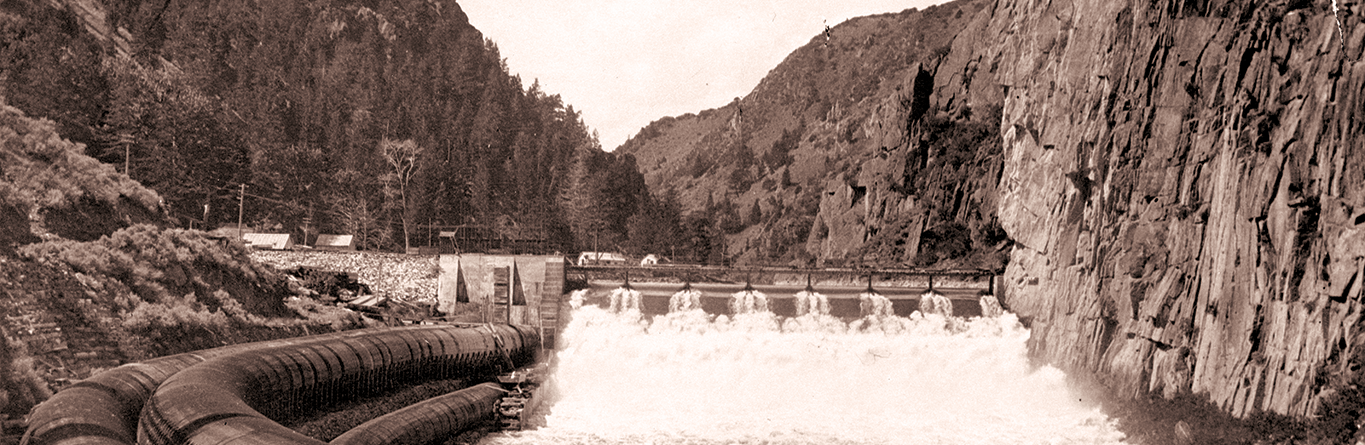
Ten miles North of Ennis Montana and at the head of Bear Trap Canyon lies the Madison Dam. The original dam on the Madison River was constructed in 1901 by the Madison River Power Company. This 11-foot-high dam with a wooden flue and rubble masonry powerhouse had immediate issues with icing, caused by frigid temperatures in Bear Trap Canyon.
Due to higher demand for electric generation from nearby communities and mining, Madison River Power, with the help of an investment from Butte Electric and Power company, began construction on a larger dam a mile downstream from the original in 1905. The new Madison dam came out to be 39 feet high, 257 feet long, and has a generation capacity of 13 megawatts. Construction of this dam was completed in 1906, making it Northwestern Energy's oldest facility in the hydroelectric generation system today.
Historic Namesake

Historic Namesake
The Madison River and dam carry the name of President James Madison, the fourth President of the United States of America. The river, with its headwaters located in Yellowstone National Park, was named by the Lewis and Clark Expedition.
The story is similar for two other rivers, the Gallatin and the Jefferson. These three rivers flow together near Three Forks Montana to form the Missouri River.
At the time of the Louisiana Purchase, Thomas Jefferson was the President of the United States, Albert Gallatin was secretary of the treasury, and James Madison served as secretary of the state. It is believed that their roles in the purchase, as well as the expedition, are what led to the river names.
A Rocky Location

A Rocky Location
The Madison Dam has seen its fair share of challenges from the environment. Not only was icing a problem in its early years, but the dam's canyon location makes it especially vulnerable to falling rocks.
In 1990, a rockslide damaged a 150-foot section of the dam, shoved a vehicle in the water, and nearly buried a parking lot near the dam in mud, rocks, and other debris. This caused a temporary shutdown of generation during repairs and cleanup. Almost 20 years later, a boulder the size of a school bus crashed into the dam, causing significant damage. Luckily, no one was injured in either of these incidents.
"Golden Kilowatts: Water Power and the Early Growth of Montana"
The book "Golden Kilowatts: Water Power and the Early Growth of Montana" by Butch Larcombe tells the history of Montana's dams.
Historic American Engineering Record (HAER)
The Historic American Engineering Record (HAER) was established in 1969 as one of the Heritage Documentation Programs administered by the National Park Service (NPS) to record the engineering and industrial heritage of the United States. HAER was created through agreements between the NPS, the Library of Congress, and several engineering societies.
HAER documents a variety of engineering and industrial sites, structures and objects. Transportation infrastructure, bridges, mines, industrial buildings/machinery and public utilities are all types of engineering and industrial heritage that have been recorded under this program. The goal of the HAER program is to record the engineering heritage that is subject to being lost due to a variety of factors. These may include technological advancements creating obsolescence, changing regulations surrounding health/environmental/public safety, and development issues. The NPS, through their Heritage Documentation Program, issues the guidelines for HAER documentation and its dissemination.
As part of the FERC licenses for the eleven hydroelectric facilities that NorthWestern Energy own and operate, HAER documentation is conducted when a project or upgrade is determined to have an adverse effect on a facility’s engineering heritage. After the HAER documentation is completed for a particular project or upgrade, NorthWestern Energy submits the documentation to the NPS for review and acceptance. Once accepted, the HAER program coordinates with the Library of Congress to store the document and disseminate it to the public on their website.
Each link below connects to the applicable HAER document available on the Library of Congress website. Visit Historic American Engineering Record (HAER) Documentation to learn more about the HAER documentation conducted at other NorthWestern Energy hydroelectric facilities.