How to read your meter

Non-communicating meters

How do I read my non-communicating meter?

Click the links below for instructions on how to read your meter, self-read dates and a postcard you can use to submit your meter readings.

Gas meter

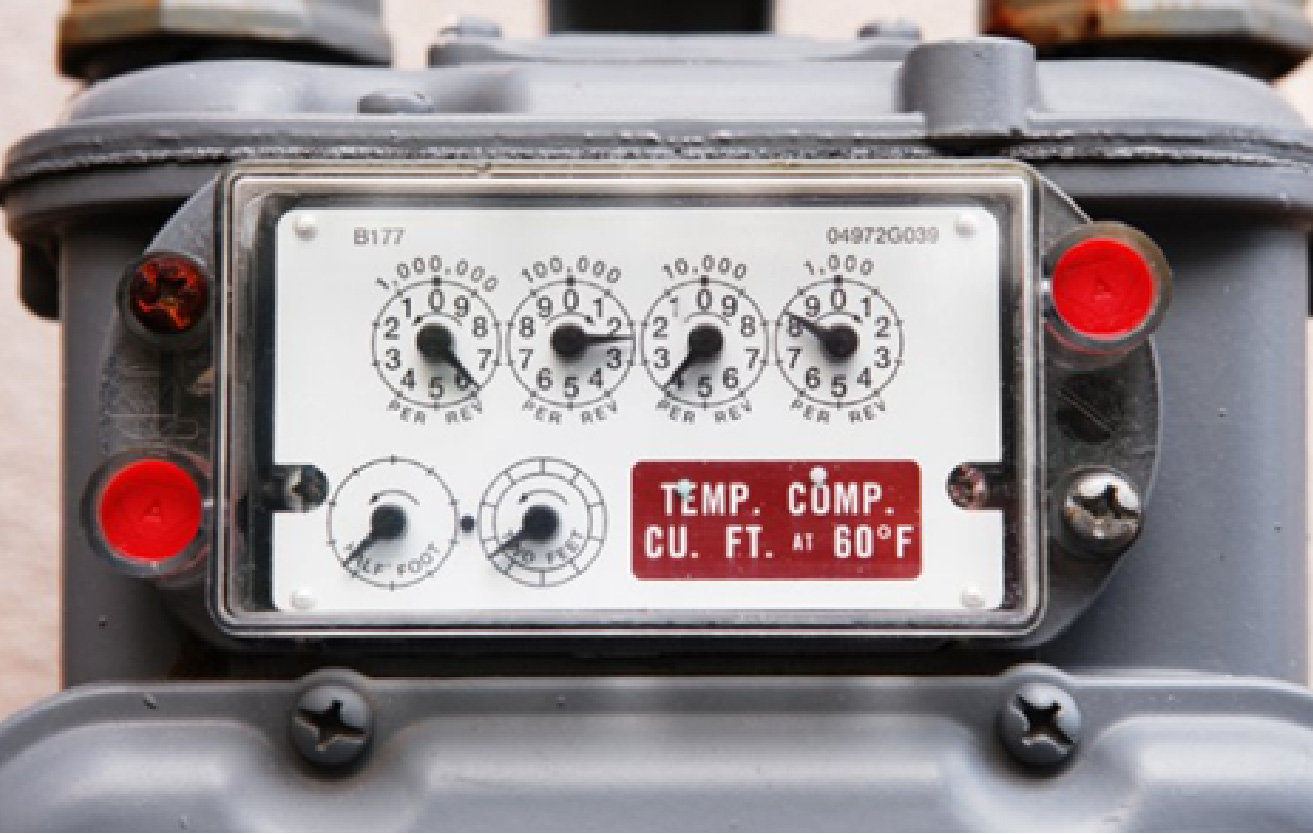
an up-close view of the dials on a gas meter

Gas meter

Natural gas dials represent the amount of natural gas measured in volumes of hundreds of cubic feet (ccf). 

A gas meter is driven by the force of the moving gas in the pipe, and also turns faster as the flow increases. Each time the dial with the lower value makes one complete revolution, the pointer on the next higher value dial moves ahead one digit.

To read your meter: 

  • Be at eye level of the dials.
  • Mark the dials from left to right.
  • Take note of the direction of the arrows on the display – the pointer of adjacent dials turn in opposite directions to each other.
  • Draw the pointer on the dials as displayed on your gas meter.
  • When the pointer on the dial is between two numbers, record the lower number.
    • If the pointer is between 9 and 0, 9 is the lower number.
  • When the pointer is directly on the number, look at the dial to its right:
    • Has the dial on the right has passed 0, yes, use the number that the pointer is on.
    • The dial on the right has not passed "0," use the number less than what the pointer is on.

Example:

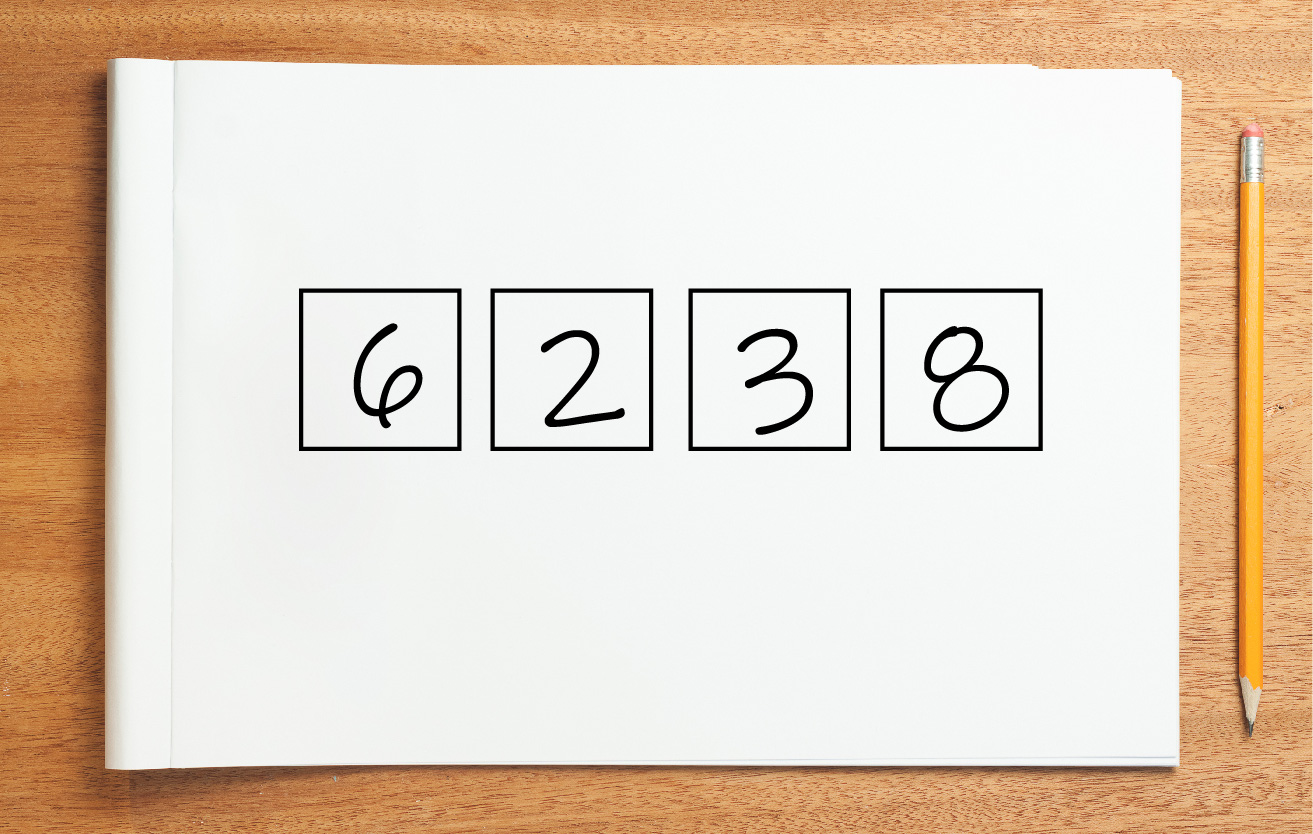
In the example below, the reading is: 6 2 3 8

an up-close view of the dials on a gas meter
the numbers 6 2 3 8 written on a piece of paper

Electric meter

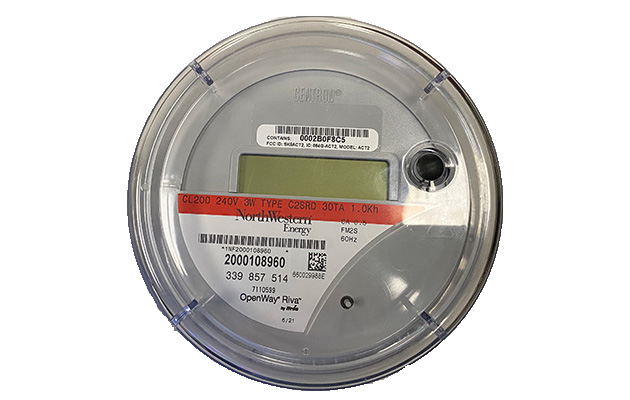
An electric AMI meter isolated on a white background

Electric meter

The basic unit of measure of electric power is the watt.  One thousand watts is called a kilowatt. 

When you use one thousand watts of power in one hour, you have used one kilowatt (kWh).

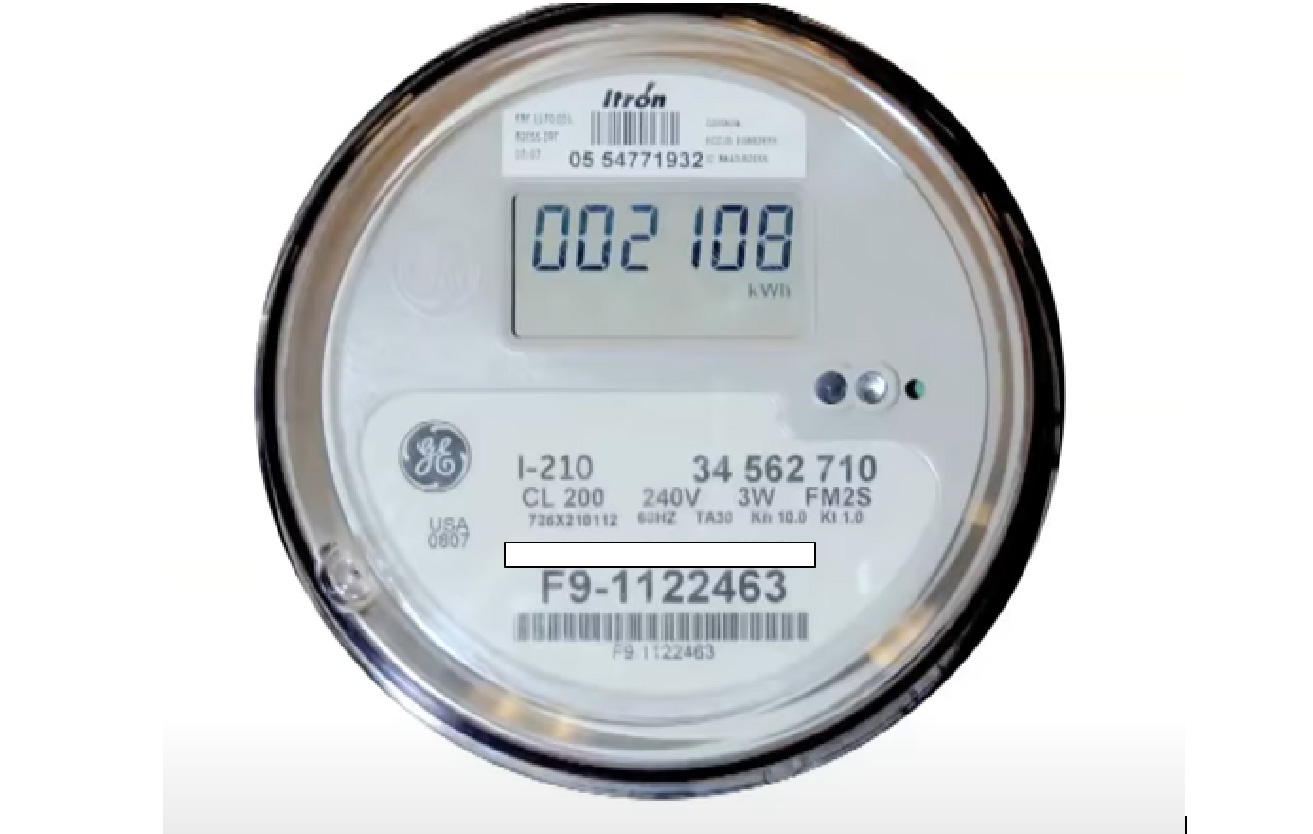
We bill you by the kWh. Your electric meter is a digital meter that has an electronic display that displays the current reading, like a digital clock.

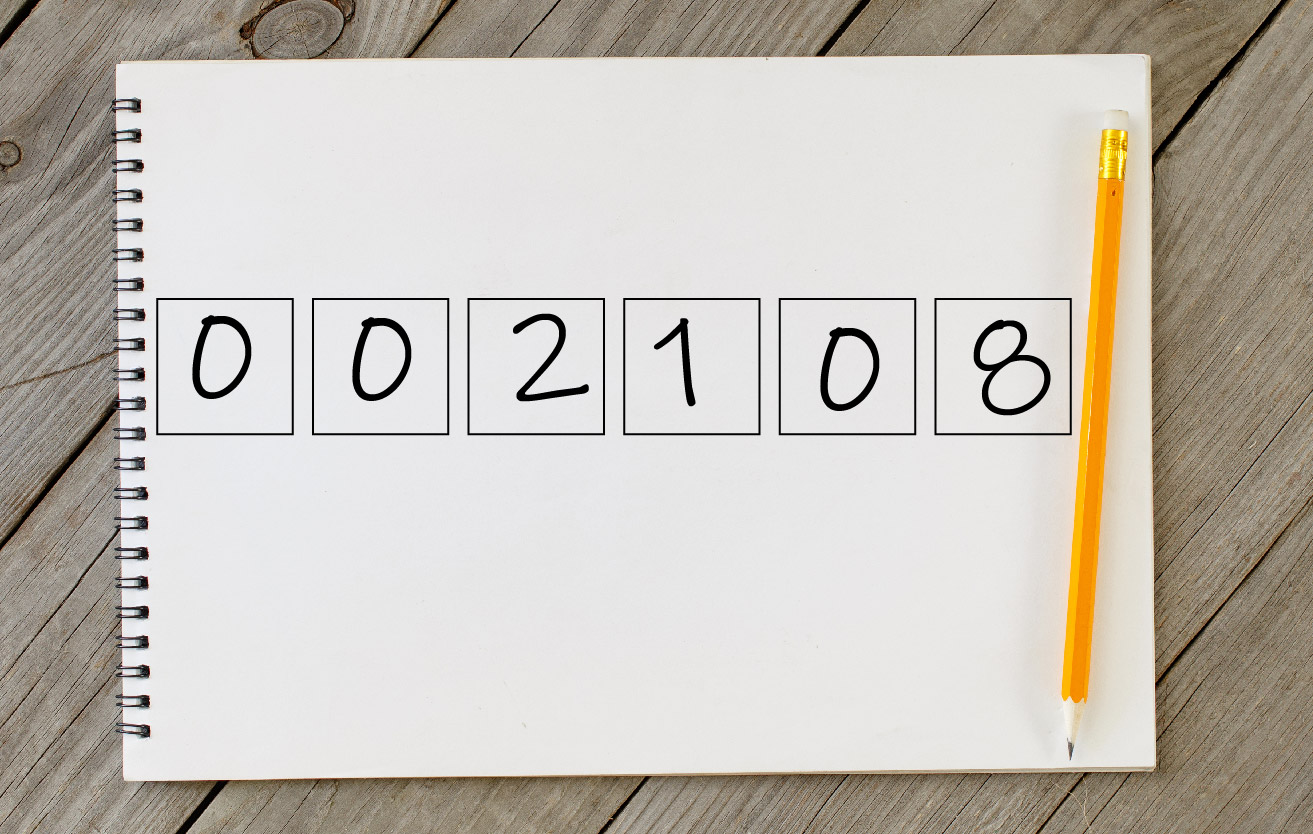
When reading an electric meter, write down the numbers as shown on the meter.


Example:

In the example below, the reading is: 0 0 2 1 0 8

an up-close view of an electric meter
A note pad and pencil. On the notepad, the numbers 002108 are written.

When submitting your meter reads, please be ready with your account number, your service address, your meter read(s) and the date you read your meter(s).

Options to submit your meter reads:
NorthWestern Energy
11 E. Park St.
Butte, MT 59701

Communicating meters

How do I read my communicating advanced meter?

Click the links below for instructions on how to read your meter, self-read dates and a postcard you can use to submit your meter readings.

Advanced Meter FAQs

NorthWestern Energy began installation in Montana in 2021. Here is a list of approximate dates for the Montana Meter Upgrade project by area:

  • Missoula Division: completed August 2022
  • Butte Division: completed June 2022
  • Bozeman Division: completed May 2024
  • Billings Division: completed October 2024  
  • Lewistown District: completed October 2024
  • Havre District: completed November 2024
  • Helena Division: June 2024 – May 2025
  • Great Falls Division: August 2024 – 2028
No. The electric meters and gas modules are purchased and owned by NorthWestern Energy. They are part of our infrastructure, similar to our power poles and transformers.

A NorthWestern Energy employee will install your new meter or module.

Most of the installations will occur during business hours, though there will be cases when evening or weekend installations may be necessary. Customers don't need to be home.

A door hanger will let residents know their upgrade was successful. If the technician cannot perform the upgrade, a door hanger will be left with instructions to call to make an appointment.

NorthWestern Energy has a contract to recycle the electric meters and gas modules in use now when new meters and modules are installed.

Yes. The Federal Communications Commission (FCC) regulates the safety limits for all RF emissions, and smart meter and module emissions make up a small portion of the limit. The RF emissions of old one-way communication meters and the new two-way communication meters are both approved by the FCC. Radio frequency emissions are also produced by common household devices such as microwaves, baby monitors and TVs.

Yes. Customer privacy and security are NorthWestern Energy priorities. The company’s strict security standards have contributed to protecting the energy grid and customer privacy for years. The meters do not collect, store or transmit any personally identifiable information.

The meters measure total energy and cannot differentiate energy usage by appliance or anything else within a home or business. The transmitted energy use information is encrypted.

Customers who want to keep their existing meters can call NorthWestern at 888-467-2669 or email NorthWesternEnergyMeters@northwestern.com to be added to the bypass list. Customers who previously requested an opt out do not need to contact NorthWestern again to be bypassed and keep their meters.

NorthWestern will be reaching out to customers who received an advanced meter despite their request to opt out. For those who still wish to opt-out, NorthWestern will ensure that the advanced meter is removed and replaced with a meter similar to the one that was there before. Customers will not be charged for this service. 

Customers who have questions about the advanced meter opt-out program can contact NorthWestern at 888-467-2669
or the Montana Public Service Commission at 1-800-646-6150 or pschelp@mt.gov.

Jason Merkel

Straight Answers on Data Centers and Montana’s Energy Future

Date: Jan 27, 2026

TYPE: News

NorthWestern Energy Vice President Distribution Jason Merkel

Montanans deserve straight answers about data centers and what their arrival could mean for our energy system. Questions raised recently are fair ones, and I appreciate the opportunity to address them directly. At NorthWestern Energy, our commitment is—and will remain—protecting the customers and communities we already serve.

It’s important to be candid about what will—and will not—take place if new large‑load customers, including data centers, enter our system.

What Will Not Happen

Your reliability will not suffer.

We will not connect any customer whose energy demand compromises the reliability Montana families and businesses depend on. For us, reliability is not negotiable.

Your rates will not increase to pay for someone else’s infrastructure.

Under the Large Load Tariff we will propose, new high‑demand customers must pay the their fair share of the cost of the transmission, generation, and distribution upgrades they require. They will also post security deposits and pay exit fees if they leave before those costs are recovered. These tools protect existing customers from stranded or shifted costs.

There will be no hidden discounts or special deals at your expense.

Rates for large-load customers are set in a public process through the Montana Public Service Commission. They are not privately negotiated and cannot be used to subsidize big customers at the expense of residential ratepayers.

Montana doesn’t need to repeat the mistakes made in other states. With guardrails crafted for Montana’s interests, we can ensure those outcomes won’t happen here.

NorthWestern Energy Montana energy rates are already below the national average – this framework is designed to keep them that way

What Will Happen

Transparent, predictable rules.

The proposed Large Load Tariff will create a clear framework for new large-load customers. It will provide regulatory certainty and ensure accountability.

Fairness across all customer classes.

Our responsibility is ensuring that new large‑load customers cover the costs they create. That is guiding how we develop this tariff and plan for the future.

Potential longterm benefits for residential customers.

When large load customers pay their full share, and when our system is used more efficiently, the overall cost can be shared across more customers. While no energy company can predict future rates with certainty, it’s realistic that residential customers may benefit over time from the growth they are not being asked to subsidize.

Economic opportunity for Montana communities.

Data centers—and the industries that support them—bring long-term investment, local tax revenue, and good-paying jobs. With careful planning and strong safeguards, we can grow our economy without compromising fairness or reliability.

Working From Shared Priorities

Ms. Kirk calls for three things: fair rules, transparency, and protection for everyday people.

We agree with all three.

The purpose of the Large Load Tariff is to ensure exactly that—before new customers connect, not after problems arise. The concerns she raised are not criticisms we reject; they are priorities we share.

Montana has the advantage of learning from states where rapid growth outpaced regulation. We will not repeat those mistakes.

Moving Forward Together

Montana does not face a choice between protecting customers and supporting new economic opportunities. With the right safeguards—and we are putting them in place—Montana can do both.

We will continue moving forward with transparency, accountability, and a focus on long‑term value for the customers and communities we serve.

I appreciate the engagement from consumer advocates, local leaders, and Montanans across the state—those conversations strengthen our decisions.

Montana customers come first, today and as our energy future evolves.