Non-communicating meters
How do I read my non-communicating meter?
Click the links below for instructions on how to read your meter, self-read dates and a postcard you can use to submit your meter readings.
Gas meter
Gas meter
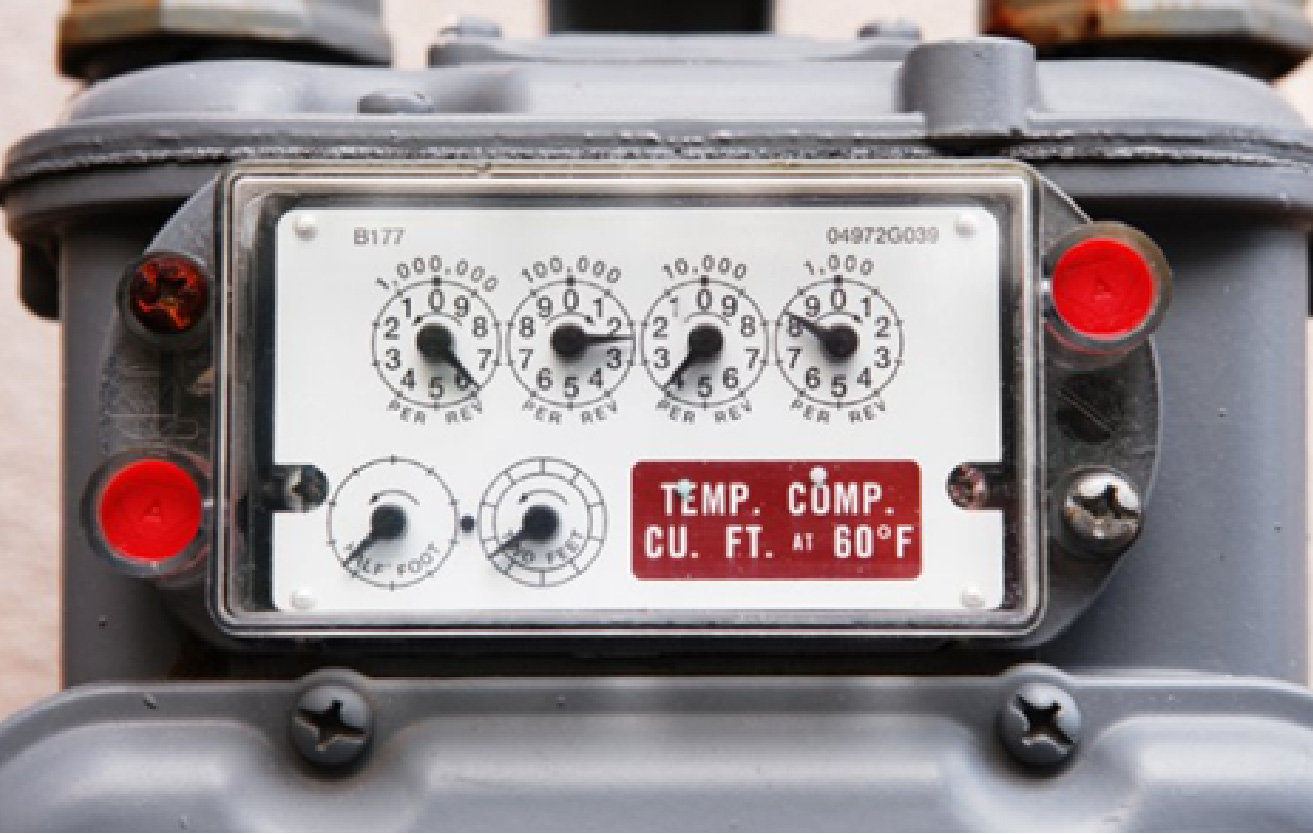
Natural gas dials represent the amount of natural gas measured in volumes of hundreds of cubic feet (ccf).
A gas meter is driven by the force of the moving gas in the pipe, and also turns faster as the flow increases. Each time the dial with the lower value makes one complete revolution, the pointer on the next higher value dial moves ahead one digit.
To read your meter:
- Be at eye level of the dials.
- Mark the dials from left to right.
- Take note of the direction of the arrows on the display – the pointer of adjacent dials turn in opposite directions to each other.
- Draw the pointer on the dials as displayed on your gas meter.
- When the pointer on the dial is between two numbers, record the lower number.
- If the pointer is between 9 and 0, 9 is the lower number.
- When the pointer is directly on the number, look at the dial to its right:
- Has the dial on the right has passed 0, yes, use the number that the pointer is on.
- The dial on the right has not passed "0," use the number less than what the pointer is on.
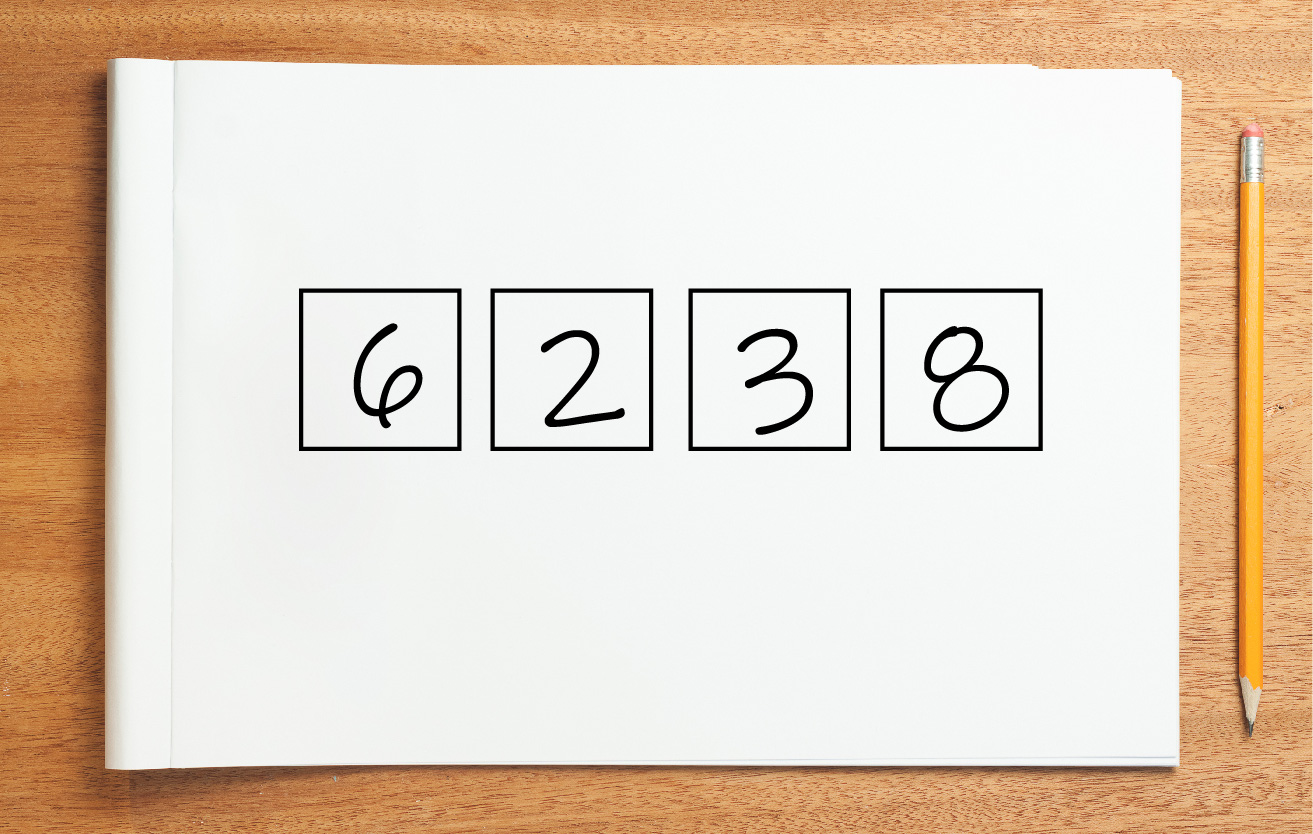
Example:
In the example below, the reading is: 6 2 3 8
Electric meter
Electric meter
The basic unit of measure of electric power is the watt. One thousand watts is called a kilowatt.
When you use one thousand watts of power in one hour, you have used one kilowatt (kWh).
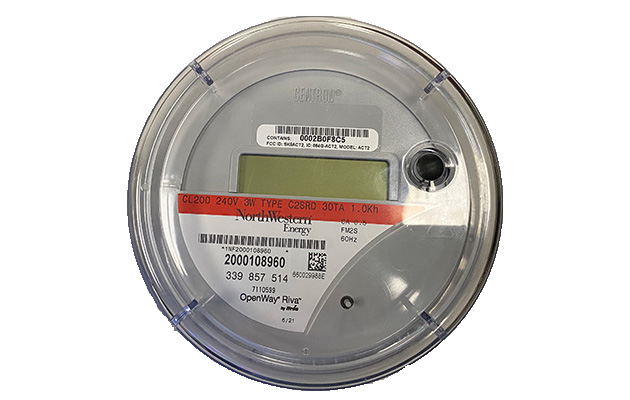
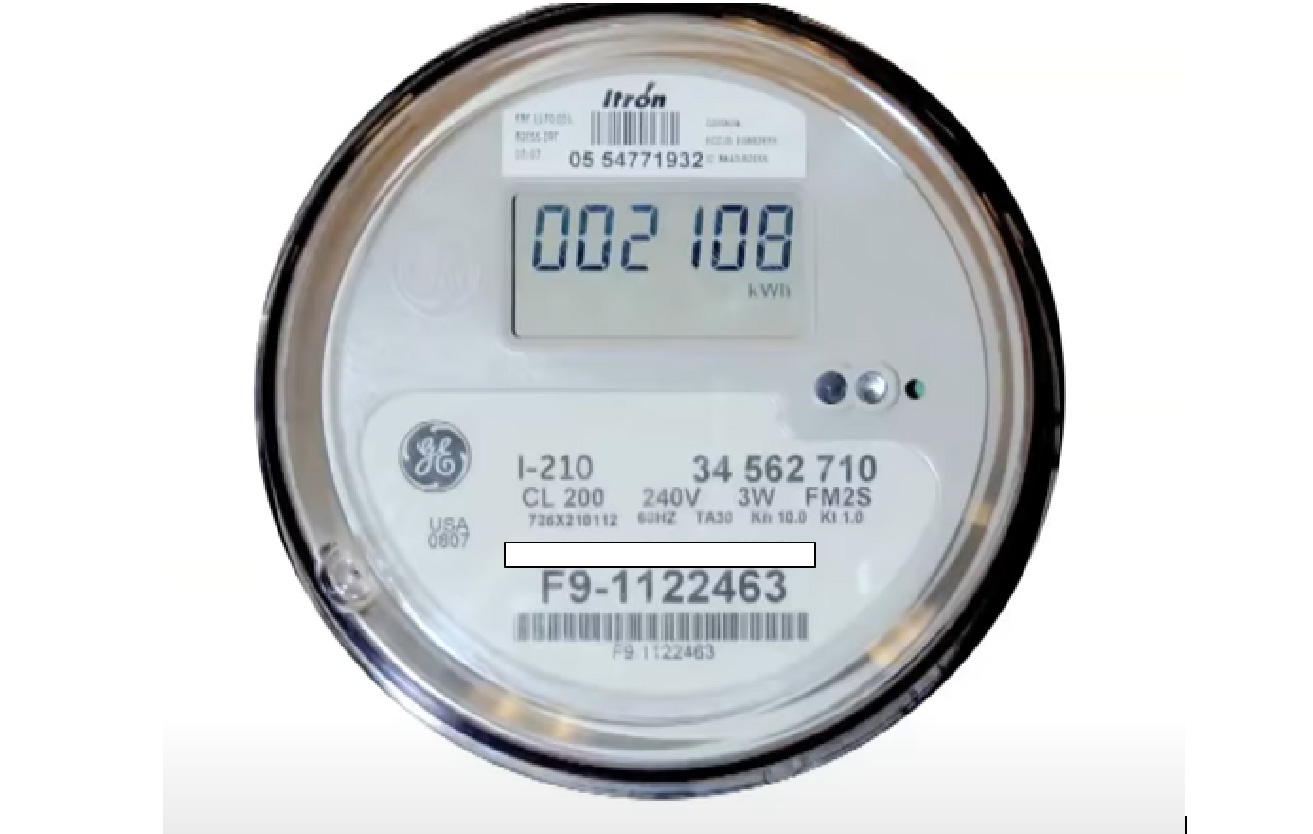
We bill you by the kWh. Your electric meter is a digital meter that has an electronic display that displays the current reading, like a digital clock.
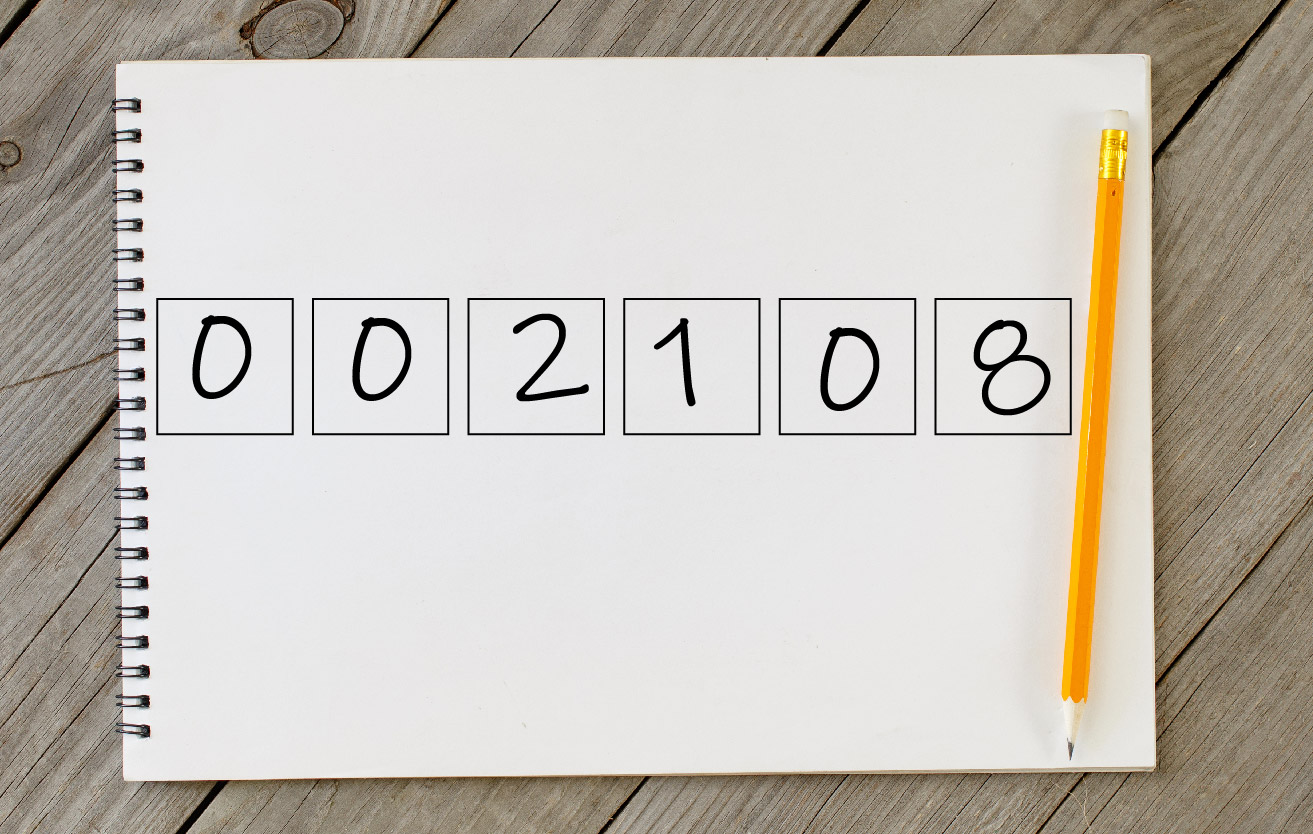
When reading an electric meter, write down the numbers as shown on the meter.
Example:
In the example below, the reading is: 0 0 2 1 0 8
When submitting your meter reads, please be ready with your account number, your service address, your meter read(s) and the date you read your meter(s).
Options to submit your meter reads:
- Submit online in My Energy Account
- Call (888) 467-2669; M-F 7 a.m.-6 p.m.
- Mail the meter reading card to us at:
Communicating meters
How do I read my communicating advanced meter?
Click the links below for instructions on how to read your meter, self-read dates and a postcard you can use to submit your meter readings.
Advanced Meter FAQs
What is the advanced meter project timeline in Montana?
NorthWestern Energy began installation in Montana in 2021. Here is a list of approximate dates for the Montana Meter Upgrade project by area:
- Missoula Division: completed August 2022
- Butte Division: completed June 2022
- Bozeman Division: completed May 2024
- Billings Division: completed October 2024
- Lewistown District: completed October 2024
- Havre District: completed November 2024
- Helena Division: June 2024 – May 2025
- Great Falls Division: August 2024 – 2028
Will I have to pay for the meter?
Who will change my meter?
A NorthWestern Energy employee will install your new meter or module.
When will the meters be installed and do I need to be home?
Most of the installations will occur during business hours, though there will be cases when evening or weekend installations may be necessary. Customers don't need to be home.
A door hanger will let residents know their upgrade was successful. If the technician cannot perform the upgrade, a door hanger will be left with instructions to call to make an appointment.
What happens to the meter on my home or business now?
Are radio frequency (RF) emissions coming from the meters and modules?
Yes. The Federal Communications Commission (FCC) regulates the safety limits for all RF emissions, and smart meter and module emissions make up a small portion of the limit. The RF emissions of old one-way communication meters and the new two-way communication meters are both approved by the FCC. Radio frequency emissions are also produced by common household devices such as microwaves, baby monitors and TVs.
Is customer information protected?
Yes. Customer privacy and security are NorthWestern Energy priorities. The company’s strict security standards have contributed to protecting the energy grid and customer privacy for years. The meters do not collect, store or transmit any personally identifiable information.
The meters measure total energy and cannot differentiate energy usage by appliance or anything else within a home or business. The transmitted energy use information is encrypted.What if I don’t want an upgraded meter?
Customers who want to keep their existing meters can call NorthWestern at 888-467-2669 or email NorthWesternEnergyMeters@northwestern.com to be added to the bypass list. Customers who previously requested an opt out do not need to contact NorthWestern again to be bypassed and keep their meters.
NorthWestern will be reaching out to customers who received an advanced meter despite their request to opt out. For those who still wish to opt-out, NorthWestern will ensure that the advanced meter is removed and replaced with a meter similar to the one that was there before. Customers will not be charged for this service.
Customers who have questions about the advanced meter opt-out program can contact NorthWestern at 888-467-2669
or the Montana Public Service Commission at 1-800-646-6150 or pschelp@mt.gov.
Facts Matter: Clarifying the NorthWestern Energy–Black Hills Energy Merger
Date: Jun 15, 2026
TYPE: News
By Rick Edwards, NorthWestern Energy Director Community Connections
Montanans need the facts about decisions that affect their energy future. Some commentary about the proposed merger between NorthWestern Energy and Black Hills Energy includes claims that are false or misleading, particularly when it suggests the merger is really about subsidizing data centers or shielding important information from public view. Those are serious concerns, and they require a clear response.
One of the most important points to understand is that two separate issues are being discussed at the same time. One is the merger between NorthWestern Energy and Black Hills Energy. The other is a proposed Large New Load Tariff Rule that would apply to future high energy demand customers in Montana such as data centers. These are different Montana Public Service Commission proceedings with different dockets, processes, records and opportunities for public input.
The Montana Public Service Commission public hearing on the proposed merger was held in May. Now the Commission will weigh the evidence to decide whether the merger itself will cause “no harm” to customers and is in the public interest.
Across the country, energy demand is growing, infrastructure is aging and energy companies are being asked to plan for long term reliability in a more complex environment. Meeting those needs requires steady investment and financial strength.
The purpose of this merger is straightforward. It is intended to strengthen NorthWestern Energy’s ability to make necessary infrastructure investments, improve access to capital and provide the operational flexibility needed to maintain safe, affordable and reliable service over time. Those are practical considerations that directly affect our Montana customers.
At the same time, there are questions about potential large new energy users in Montana, including data centers. Questions about impacts on energy reliability and rates are understandable.
That is why NorthWestern Energy proposed a Large New Load Tariff Rule, which is being reviewed in a separate Montana PSC proceeding. Our intent with this proposal is to establish a transparent regulatory process to ensure that customers with new, very large energy needs pay the cost of the infrastructure required to serve them. It also includes financial protections and exit provisions to protect our existing customers.
The goal is simple. Growth, if it occurs, should be managed in a way that protects the customers who already rely on our Montana energy system every day. It is important not to confuse that separate tariff rule discussion with the merger itself.
Reliable and affordable electric service requires long-term planning, continued investment and the financial capacity to respond to changing conditions. That includes maintaining infrastructure, strengthening the grid and preparing for future needs in a way that protects reliability and affordability.
The proposed merger is focused on those fundamentals. It is about maintaining a strong, regulated energy company that can continue to deliver dependable service for Montana customers affordably.
This decision will be important for our Montana customers, and it should be evaluated carefully, transparently and on the facts. Reasonable people can ask hard questions with the goal of a dialogue that moves past fear and confusion caused by inaccurate claims and instead focuses on what’s in the long-term best interest of Montanans.
Our focus remains where it should be: providing safe, reliable and affordable energy for Montana customers today and into the future.